
How to Build an AI Adoption Strategy Deck That Actually Gets Used
Stop adding AI tools randomly. This framework turns chaos into a structured rollout plan with use cases per department, risk mitigations, training workflows, and a 30-60-90 day roadmap that executives will actually approve.
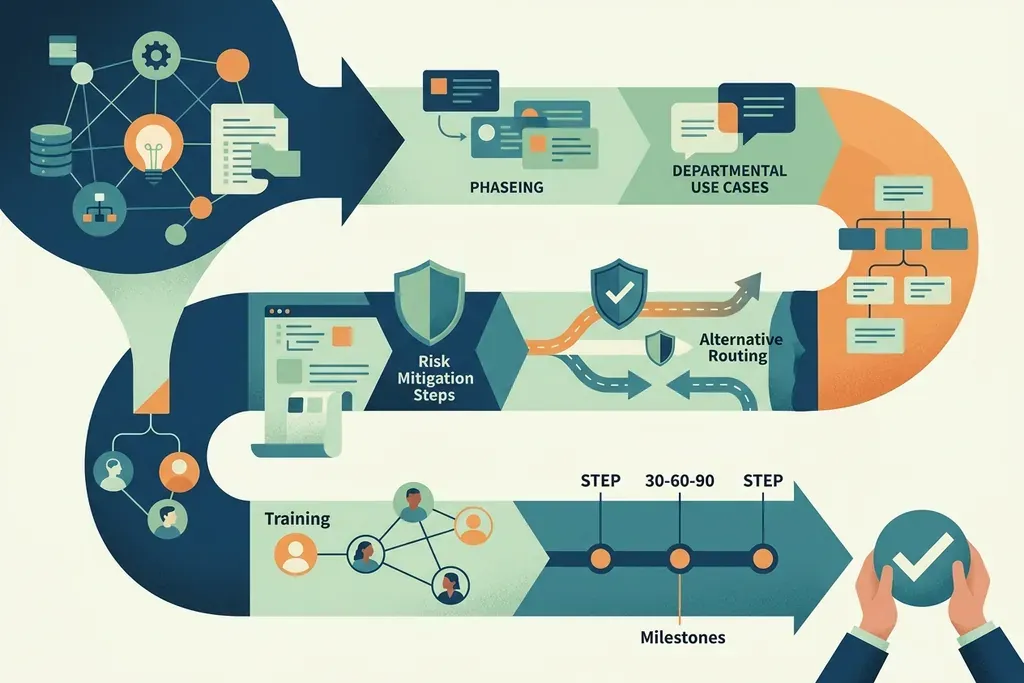
Random AI Tooling Won't Cut It
Most teams are adding AI tools without a plan — a ChatGPT license here, a Copilot subscription there, a random automation platform that one engineer found on Product Hunt. The result isn't productivity. It's fragmentation, shadow IT, and a growing security headache.
What separates organizations that extract real value from AI from those that just accumulate tools is a structured adoption strategy. And the fastest way to align an executive team around that strategy is a well-built adoption deck.
Here is how to structure one that gets buy-in — and actually gets followed.
Start with the Problem, Not the Technology
Every rollout deck I have seen that fails starts with "AI is transforming everything." Executives already know that. What they do not know is where their specific organization is bleeding time and money that AI could fix.
Open with an audit of current reality: which teams are already using AI tools without approval, what workflows are still manual and repetitive, and what the rough cost of those inefficiencies adds up to. Frame AI adoption as a solution to a concrete business problem, not a technology upgrade in search of a use case.
Map Use Cases to Departments
A one-size-fits-all adoption plan fails because every department has different workflows. Map AI applications by function:
- Engineering: code generation, code review automation, documentation generation, test case creation
- Marketing: content drafting, SEO clustering, A/B test suggestions, social scheduling
- Customer Success: response drafting, sentiment analysis, knowledge base retrieval, ticket triage
- Operations: invoice processing, data extraction, scheduling automation, compliance monitoring
- Leadership: strategic analysis, competitive research, board memo drafting, risk assessment
For each department, list exactly one tool and one workflow. No more. Overloading the deck with options creates analysis paralysis.
Address the Risks Before They Come Up
Every executive will have the same concerns: data privacy, hallucination risk, vendor lock-in, and employee resistance. Address each one directly in the deck with concrete mitigations, not hand-waving.
Data privacy means choosing tools with clear data-handling policies and avoiding training models on proprietary data. Hallucination risk means building human-review checkpoints into every AI-influenced output. Vendor lock-in means preferring tools with exportable formats and open standards. Employee resistance means a training plan, not a mandate.
Define the Training and Workflow Changes
Adopting AI without changing workflows is like buying a race car and driving it on city streets. The tool is faster, but the system around it needs to change too.
Map the before-and-after for each key workflow in the deck. Show the old process with its time cost, then the new process with the AI integration and the time saved. Use real numbers you have gathered from the pilot teams, not vendor estimates.
Training should be role-specific, not generic. A one-hour AI 101 session for the whole company is mostly wasted time. Instead, schedule 30-minute workshops per department focused on exactly the tools they will use and the workflows they will change.
The 30/60/90-Day Roadmap
A strategy deck without a timeline is just a wish list. Close with a concrete rollout plan:
- Days 1-30 — Discovery and Pilot: Select 2-3 high-impact, low-risk workflows. Run a controlled pilot with one team per workflow. Measure baseline vs. AI-assisted metrics.
- Days 31-60 — Department Rollout: Expand to full departments where the pilot succeeded. Pair each user with an AI buddy for the first week. Collect failure cases and feed them back to your AI vendor or internal prompt library.
- Days 61-90 — Governance and Scale: Publish an internal AI policy covering approved tools, data classification rules, and human-in-the-loop requirements. Establish a monthly AI review board to assess new tools and sunset underperforming ones.
Tools That Help You Build the Deck
We used Gamma to put this particular deck together. It works well for structured business communication where the content matters more than pixel-perfect design. But the tool is secondary to the structure. Whether you use Gamma, Google Slides, or a whiteboard, the framework above is what gets adoption unstuck.
Start Today — Even with One Slide
The worst AI strategy is the one you keep planning to write. Start with a single slide: the problem, one use case per department, and the 30/60/90 day timeline. Build from there. Six months from now, you will either have a plan or a collection of random tools. Choose the plan.