
Custom AI Workflows for Real Operations
How custom AI workflows connect intake, decisions, approvals, and handoffs so automation supports the way teams actually work.
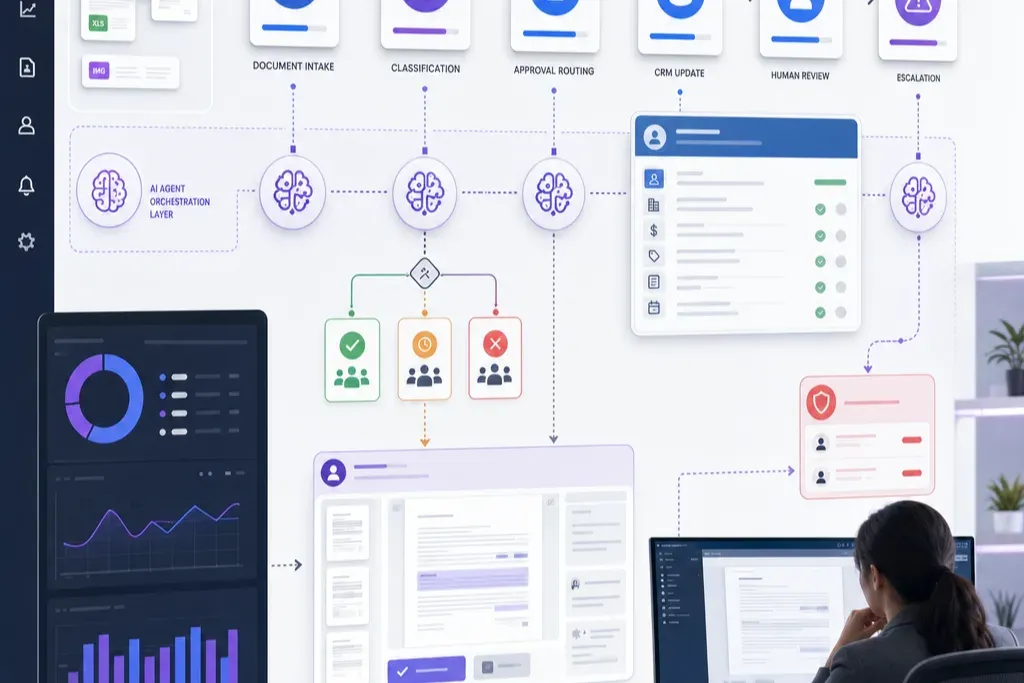
The most valuable AI systems are not isolated demos. They are workflows that move work from request to outcome.
Automation Has to Follow the Work
Every business has hidden operating logic: who checks an intake form, which details matter, when a manager approves, and where the final update must be recorded. Generic automation often misses that logic.
Custom AI workflows are built around the actual path of work. They can read documents, summarize requests, classify intent, draft responses, update systems, and escalate exceptions when human judgment is needed.
Where Custom Workflows Help Most
Otonomi looks for processes with repeatable inputs, defined decision rules, and meaningful business impact. These are strong candidates for AI-supported workflow design.
- Document intake: Extract and structure information from forms, PDFs, emails, and attachments.
- Approval routing: Prepare cases for decision-makers with summaries and recommended next steps.
- Customer operations: Classify inquiries, draft responses, and route issues to the right team.
- Sales support: Enrich leads, prepare proposals, and keep CRM records current.
Human Review Is a Feature
Good AI workflow design does not pretend every decision should be automated. It defines where AI can move fast and where people should stay in control.
Design for Iteration
The first version should solve a focused operational problem. Once the team trusts the workflow, it can be expanded with better data, deeper integrations, and more sophisticated decision support.
Related Service
Design AI workflows around your real process.
Workflow Layers
- Intake
- Classification
- Decision support
- System update
- Escalation