
Vertical AI Apps Are the Shortcut SMEs Need
Why Nextlify focuses on vertical AI apps for SMEs, and how specialized assistants reduce setup time, ambiguity, and implementation risk.
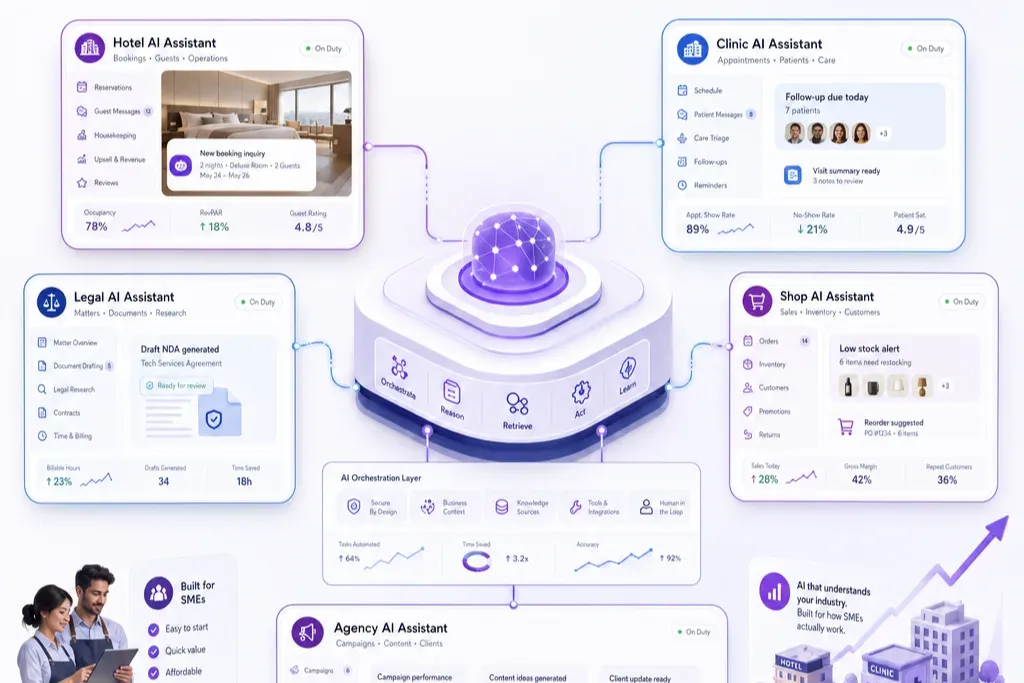
Generic AI tools are flexible, but most SMEs need something more direct: an assistant that already understands their industry workflow.
Horizontal AI Creates Too Many Choices
Most small and mid-sized businesses do not fail with AI because the models are weak. They struggle because the starting point is too open-ended. A blank chat box can help, but it does not automatically know the workflow of a hotel, clinic, law firm, agency, or retail team.
Nextlify takes a different path. Instead of asking every SME to design an AI operating model from scratch, it offers vertical AI apps shaped around specific business categories and use cases.
Vertical Means Less Translation
A vertical AI app packages domain context, prompts, workflow assumptions, and common outputs into a ready-to-use experience. That reduces the translation layer between business need and AI capability.
- Hotels: Guest inquiries, local recommendations, booking assistance, and service requests.
- Clinics: Intake support, appointment prep, patient FAQs, and follow-up guidance.
- Law firms: Lead qualification, document triage, and consultation preparation.
- Agencies: Campaign briefs, content workflows, and client reporting support.
Speed Matters for SMEs
Large enterprises can run long discovery cycles. SMEs need momentum. Nextlify is built around the idea that a business should be able to see a useful AI app live quickly, then refine it with real usage.
The right AI app should feel like a workflow shortcut, not another software project.
From Adoption to Habit
The measure of success is not whether a team tries AI once. It is whether the app becomes part of daily operations. Vertical apps make that more likely because they begin closer to the work people already do.
Related Service
Explore Nextlify vertical AI apps for SMEs.
Why It Works
- Industry-specific flows
- Faster setup
- Clearer user adoption
- Lower implementation risk